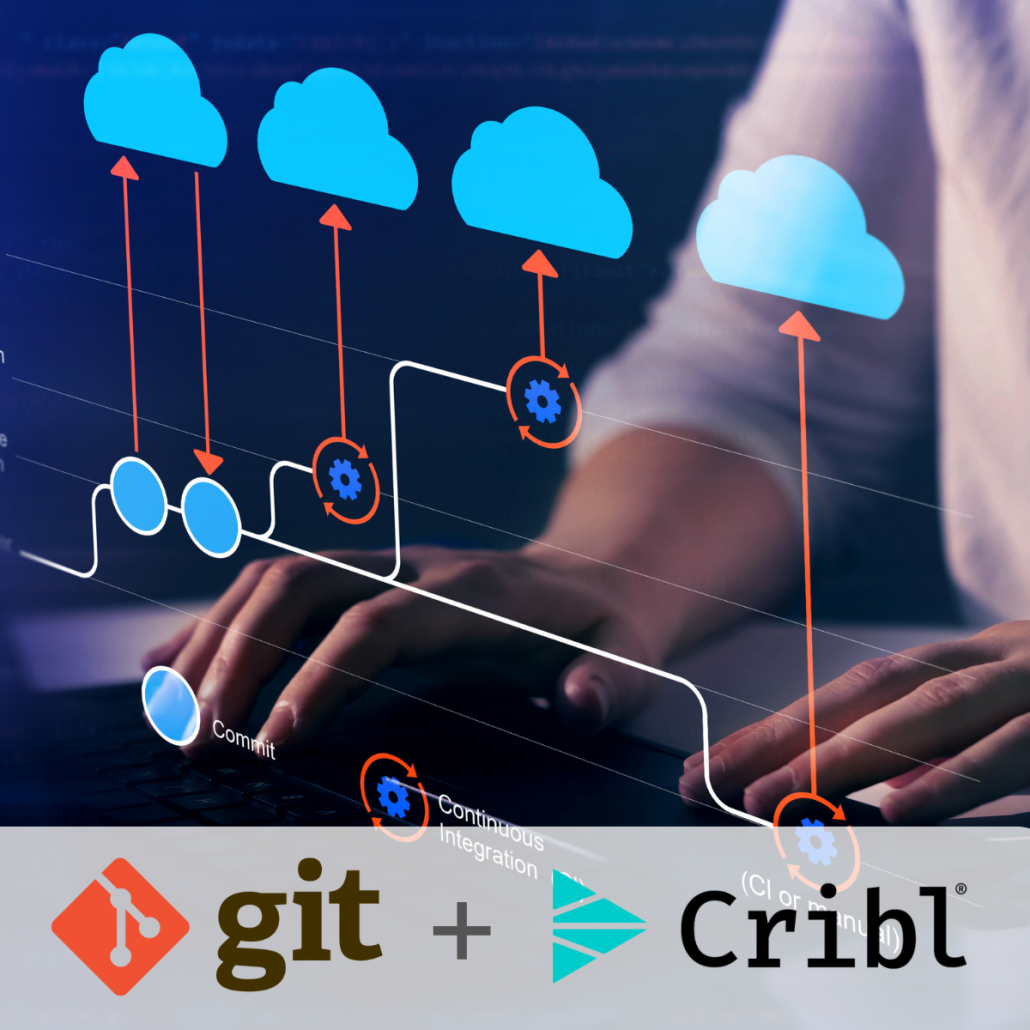
Cribl and GitOps: From Development to Production
If you’re running Cribl Stream in a distributed environment, you already know the Leader Node is critical, and a Git is non-negotiable for handling config bundling and version control. You’ve probably already discovered how painful it is to experience inconsistencies between development and production, and ultimately, these can lead to unexpected outages, security vulnerabilities, or compliance violations. To avoid this, we like to implement a full GitOps workflow. This way, you apply disciplined CI/CD methods to your configurations, enforcing change control through standard Pull Requests, ensuring everything is auditable, and keeping production rock-solid.
The Foundation: Git Integration in Cribl Stream
For us to implement any truly sophisticated change management within a distributed Cribl environment, Git integration is the absolute essential building block. Since Cribl’s architecture involves a Leader Node coordinating multiple Worker Groups, having centralized version control isn’t just a best practice – it’s mandatory. The Leader Node simply won’t start without it installed in a distributed deployment.
Why Git is Non-Negotiable for Cribl Leaders
Git provides several immediate, built-in benefits essential for managing your dynamic data pipelines:
- Audit Trails: Every configuration change is recorded in Git, creating a history of who changed what and when, satisfying crucial security and compliance needs.
- Version Comparison and Reversion: It’s an easy way to compare different configuration versions, simplifying the process of identifying and isolating problematic changes, and enabling rapid rollback when necessary.
- Configuration Bundling: On a fundamental level, the Cribl Leader uses Git to bundle the finalized configurations, which are then distributed to the Workers in the field.
Beyond Local Commits: Leveraging Remote Git
While a basic deployment just relies on local commits for managing configurations, we find that a true enterprise-grade strategy needs to utilize Remote Git integration, using tools like GitHub or Bitbucket. This remote capability is a robust backup and disaster recovery solution. The key advantage here is redundancy, since the Leader Node holds the main copy of all configurations; its failure could be catastrophic. By simply setting up the Cribl Leader to push its configurations on a schedule to that remote repository, we ensure an off-instance backup. That way, if a primary Leader Node ever goes down, we can always spin up and restore a new Leader directly from the last known-good configuration copy in Remote Git, drastically reducing our recovery time.
Implementing Full GitOps: CI/CD for Data Pipelines
GitOps elevates Git beyond a backup tool; we use it as the single source of truth for my entire data pipeline ecosystem. We believe this model is ideal for organizations that need stringent control, especially those handling complex regulatory requirements or massive volumes of mission-critical data. The core concept is pretty straightforward: it means rigorously separating the development and production environments and strictly governing the flow of all changes between them using standard Git branches and pull requests.
The Two-Environment GitOps Model
In this approach, you maintain two separate Cribl environments, each tied to a dedicated Git branch on the remote repository:
- Development Environment: Connected to the dev branch. All initial configuration work – such as building new data Sources, Destinations, or Pipelines – is done here.
- Production Environment: Connected to the prod branch. Crucially, the Production Leader is set to a read-only mode. This hard constraint prevents manual, unauthorized changes directly in production, forcing all changes to follow the GitOps pipeline.
The Standard GitOps Workflow
The flow for deploying a new configuration involves a structured, multi-step process:
- Development and Commit: You will need to create or modify a configuration (e.g., a new Pipeline) in the Dev Leader. Then use the UI to deploy the changes to the worker and to the remote Git repository’s dev branch.
- Pull Request and Review: Create a Pull Request (PR) to merge the changes from the dev branch into the prod branch. This triggers a review by the Cribl Administrator or a designated approver.
- Merge and Automation: Once reviewed and approved, the PR is merged, updating the prod branch with the verified configuration. This merge action does not automatically deploy the configuration to the Production Leader.
- External Sync Trigger: To apply the changes, an external CI/CD tool (such as Jenkins, GitHub Actions, or a homegrown script) must trigger the Production Leader. You can do this by hitting the Leader’s REST API endpoint
/api/v1/version/sync - Deployment to Workers: Once the Production Leader has the new configuration, it automatically distributes the update to its connected Workers.
Handling Environment-Specific Configurations
A key challenge in this two-environment model is that, by default, all development configurations are pushed to production. This isn’t always desirable, and sometimes you need granular control. This is where using environment tags comes into play to manage state:
- C.LogStreamEnv Variable: Cribl automatically manages a C. LogStreamEnv variable that identifies whether an instance is DEV or PRD (Production).
- Selective Configuration: The environment tag can be used in JavaScript expressions for Sources and Destinations. For example, a Destination defined for production will be enabled in the Prod environment but will appear disabled (“greyed out”) in the Dev environment, offering necessary flexibility while maintaining the core GitOps flow.
Use Case : Updating Lookup Files in GitOps
With enabling GitOps, one interesting use case we have come across is updating a lookup in Cribl via Git. While Cribl provides REST API endpoints for programmatically updating lookups, this customer was interested in using their existing CI/CD process for providing a self-service capability to their users for updating the lookup file. The following steps detail how the update flow looks:
- User Update: The user (or an automated script) updates the Lookup File directly within the remote Git repository’s dev branch.
- Pull Request and Review: Create a Pull Request (PR) to merge the changes from the dev branch into the prod branch. This triggers a review by the Cribl Administrator or a designated approver.
- Merge and Automation: Once reviewed and approved, the PR is merged, updating the prod branch with the verified configuration. This merge action does not automatically deploy the configuration to the Production Leader.
- External Sync Trigger: To apply the changes, an external CI/CD tool (such as Jenkins, GitHub Actions, or a homegrown script) must trigger the Production Leader. You can do this by hitting the Leader’s REST API endpoint
/api/v1/version/sync - Update DEV leader: Since the lookup update happened directly on the dev branch, the DEV leaders is not aware of the change and we need to do a git pull on the dev leader to keep it up to date with the branch. This again can be part of the external trigger automation
Final Thoughts
Transitioning to a GitOps workflow for Cribl Stream elevates how we manage our data pipelines, moving us away from manual, error-prone changes toward a scalable, auditable, and secure CI/CD process. By embracing Git as the control plane for configuration, we gain the confidence that every single deployment is consistent, every change is traceable, and the production environment is protected by a strong, automated defense against unauthorized modifications. This is more than just an operational improvement; it’s a critical step in building a truly resilient and compliant data observability platform.
Looking to expedite your success with Cribl? View our Cribl Professional Service offerings.
Discovered Intelligence Inc., 2025. Unauthorized use and/or duplication of this material without express and written permission from this site’s owner is strictly prohibited. Excerpts and links may be used, provided that full and clear credit is given to Discovered Intelligence, with appropriate and specific direction (i.e. a linked URL) to this original content.